
Dementia
Training
Australia VR
Helping health, aged-care and support professionals understand dementia-friendly design by experiencing spaces from a different perspective.
- Client Dementia Training Australia
- Location Australia
The challenge
VR training that puts professionals in the patient’s place
For a person living with dementia, the design of a space decides how the day goes. In a poorly designed environment, a patterned carpet can read as holes in the floor, glare can wash out a doorway, and a bathroom with no visible cue may as well not exist. The result is confusion, anxiety and a loss of independence.
In a well designed space the same person moves with confidence. Clear sightlines, strong contrast and familiar cues let them find their way, and the environment supports them instead of working against them.
That contrast is what Dementia Training Australia needed professionals to understand. Not as a checklist of guidelines, but as something you have felt from the patient’s side of the room.
The immersive idea
Feel the bad, feel it medicated, then see it done right
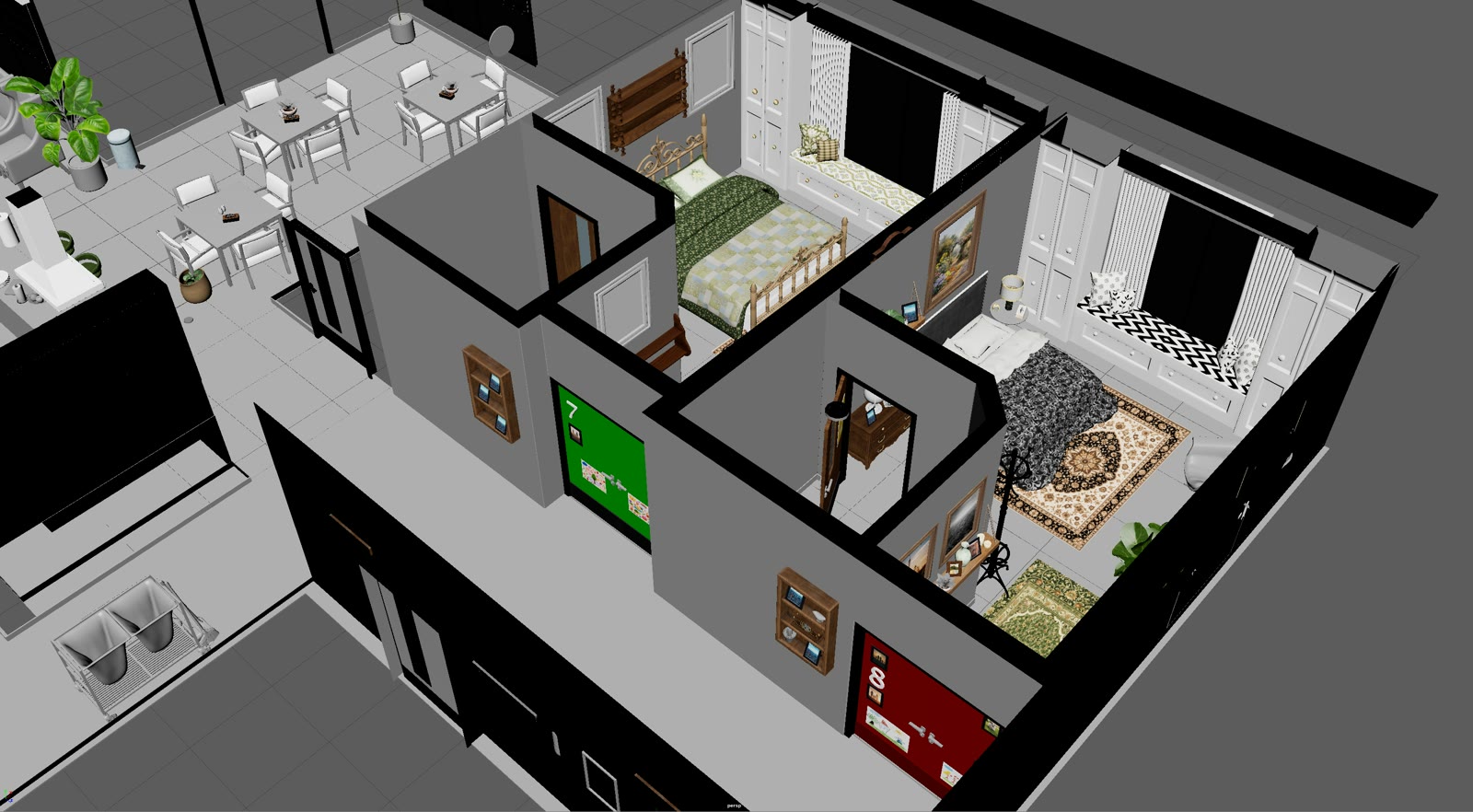
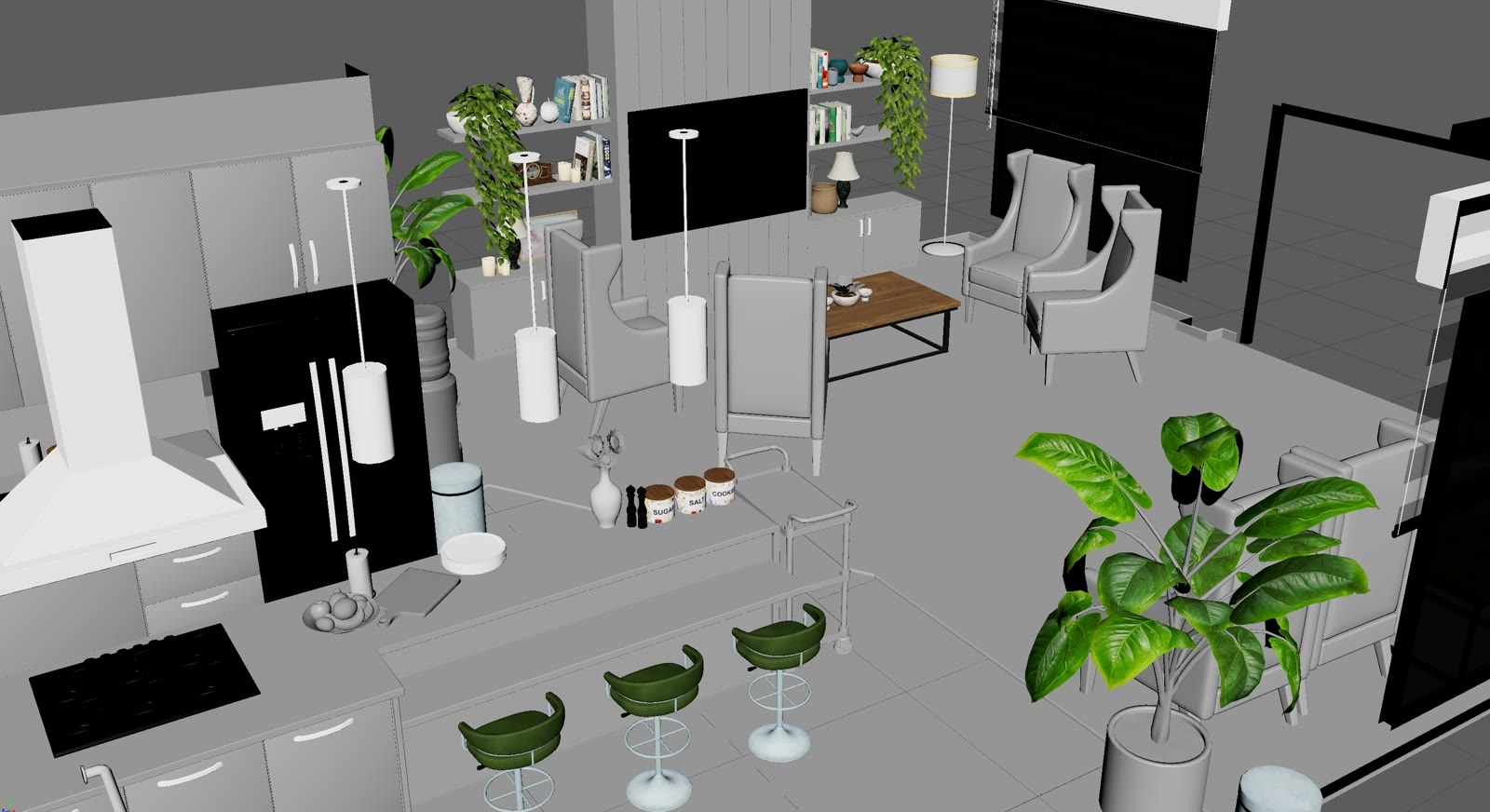
The training is structured as three exercises that learners move through in sequence, all set in the same familiar care environment.
First, learners navigate a space built with no design principles at all, experiencing firsthand how hard everyday tasks become. Then they repeat the journey while the experience simulates the influence of medication, layering disorientation on top of the poor design.
Finally, they step into the same space transformed by good design principles and feel how dramatically the difficulty falls away. The lesson is not told, it is experienced twice over and then resolved.
Why XR?
You cannot teach disorientation on a slide
The medication exercise is the clearest example of something only VR can do. Many residents in care experience the world through the fog of medication, and the experience simulates that state directly: vision blurs and swims, focus drifts, and a room the learner just walked through becomes genuinely hard to navigate.
That disorientation is felt in the body, not described. A healthy professional can safely spend a few minutes inside a perceptual state they could never otherwise access, and it permanently changes how they think about the people they design and care for.
VR also makes the comparison honest. The same room, walked at full scale under three different conditions, lets the design principles prove themselves rather than being asserted.
Inside the experience
Small decisions, felt at full scale
The learning lives in the details. A light switch placed where a resident naturally reaches for it, or hidden on the wrong wall. A bathroom that announces itself with clear signage visible from the common areas, or a corridor of identical doors with nothing to tell them apart.
Learners complete simple, everyday tasks in each exercise, and the environment decides how hard those tasks are. Flooring that changes pattern mid-room, furniture that blends into the walls, and glare across a doorway all become obstacles they have to work through, not bullet points to memorise.
When the same tasks are repeated under good design principles, every one of those details is resolved, and learners can see exactly which decision made the difference.
The impact
Building understanding through lived perspective
The experience transforms dementia-friendly design from a set of guidelines into something professionals have personally felt the consequences of.
A learner who has fumbled for a light switch, lost a bathroom and navigated a familiar room through the influence of medication understands why these decisions matter in a way no document can teach.
Delivered on standalone headsets that are simple to roll out across training settings, the experience gives health, aged-care and support professionals a patient’s perspective they can carry into every environment they shape from now on.