
Disaster
Preparedness
VR
An immersive Virtual Reality experience created with Gladstone Regional Council, using a highly realistic Queensland home and evolving environmental effects to make the danger of natural disasters feel immediate, believable and close to home.
- Client Gladstone Regional Council
- Location Queensland
The challenge
Making invisible risk feel real
Natural disasters are difficult to communicate before they happen.
Warnings, maps and preparedness guides can explain the risk, but they cannot always convey what it feels like when the environment around you begins to change.
Working with Gladstone Regional Council, we wanted to explore how immersive technology could make that danger more tangible — helping people understand not just what might happen, but how quickly an everyday situation can become serious.
The immersive idea
Building a world people believe in
For the experience to work, the environment needed to feel familiar enough to be real.
We created a highly detailed Queenslander home and placed the user directly inside it.
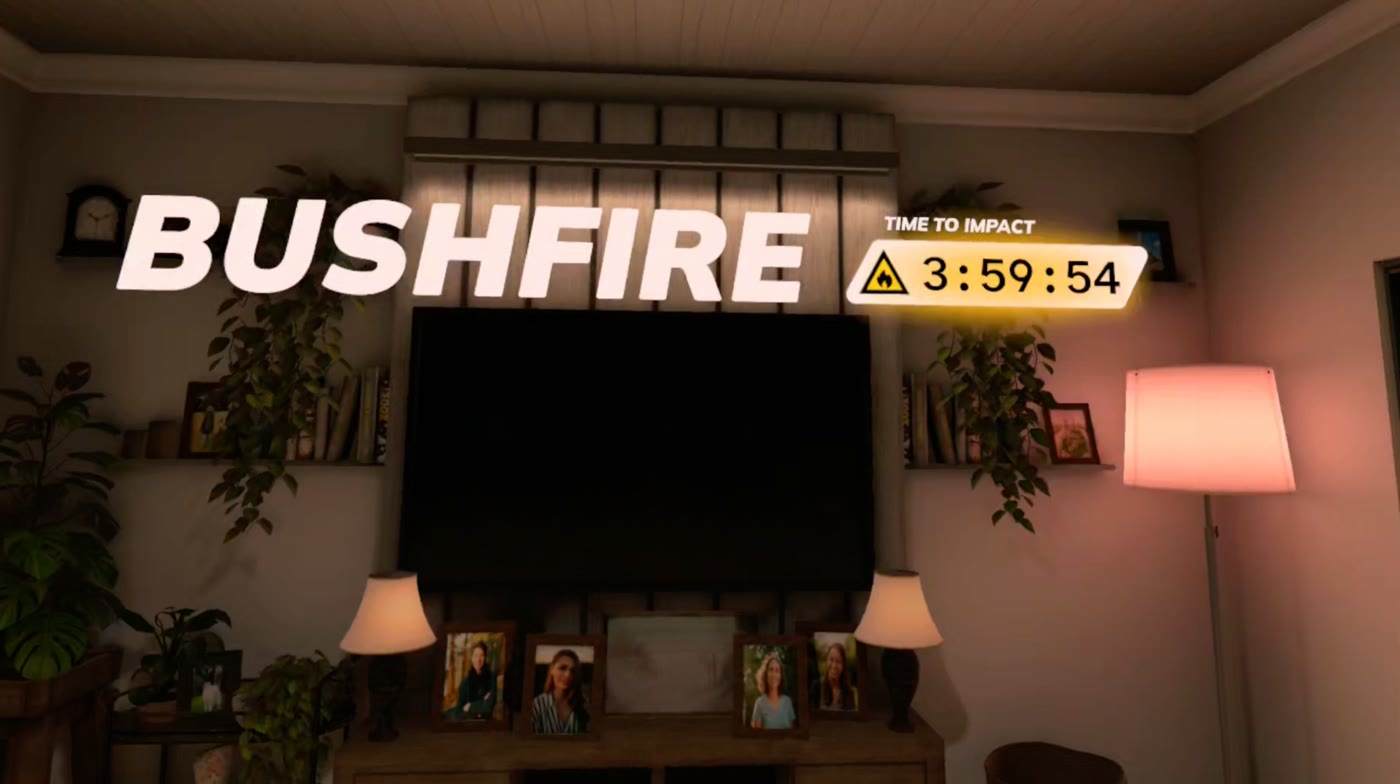
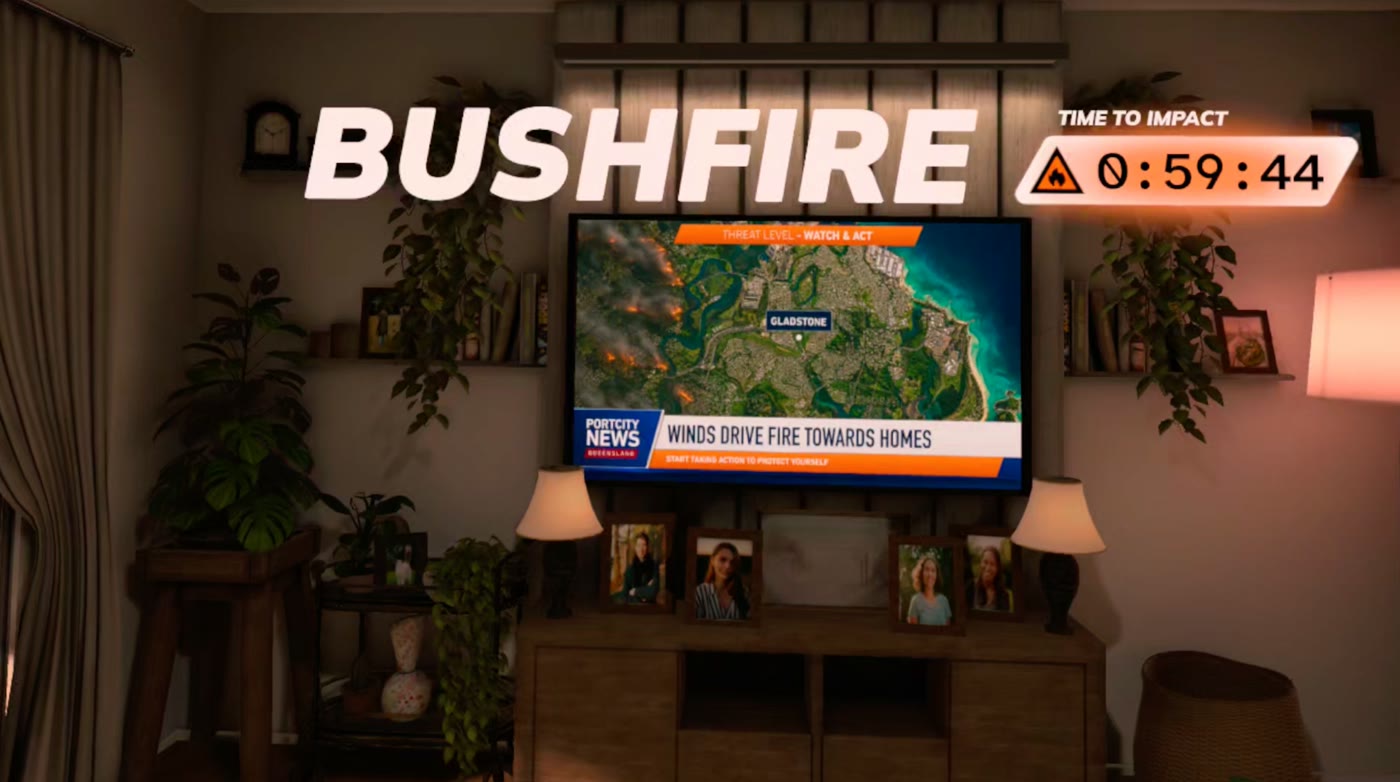
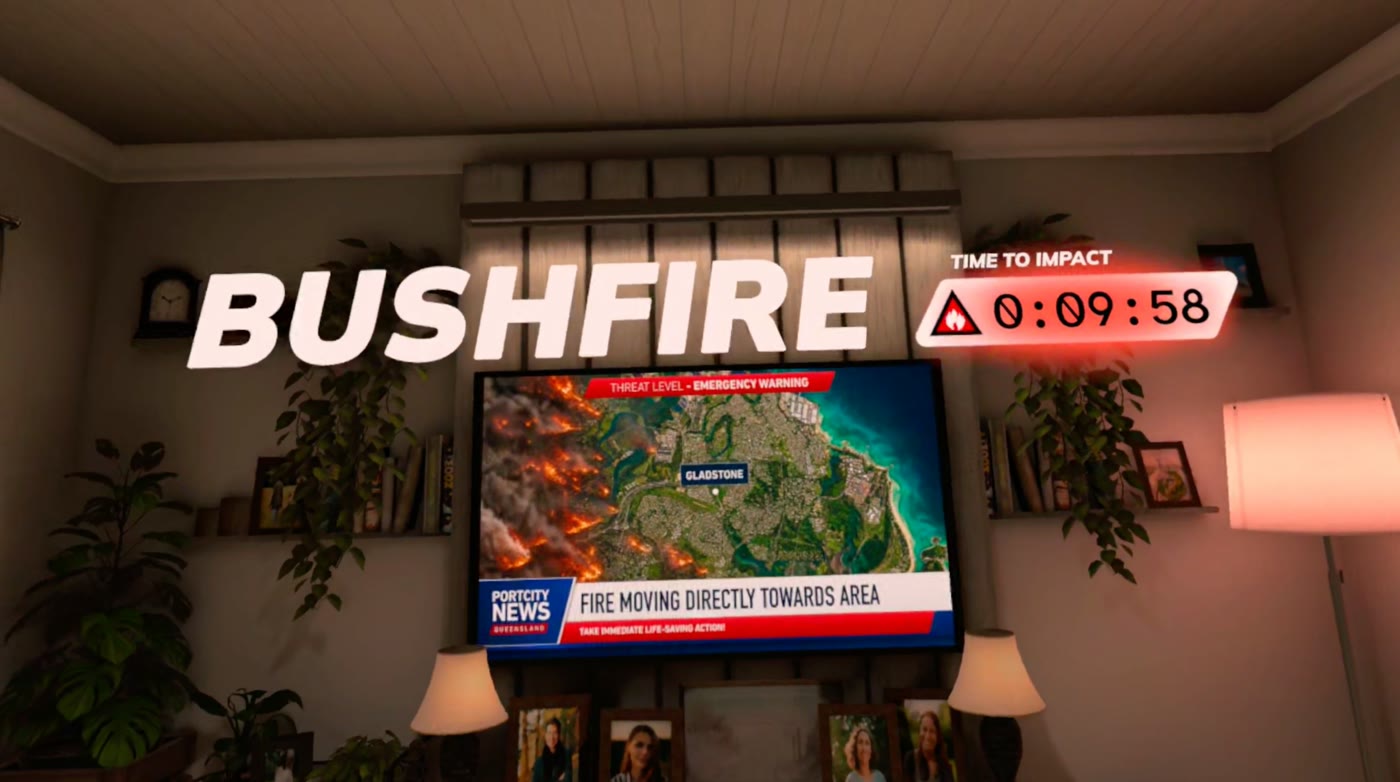
From there, four different disaster scenarios — flood, severe storm, cyclone and bushfire — begin to develop around the property.
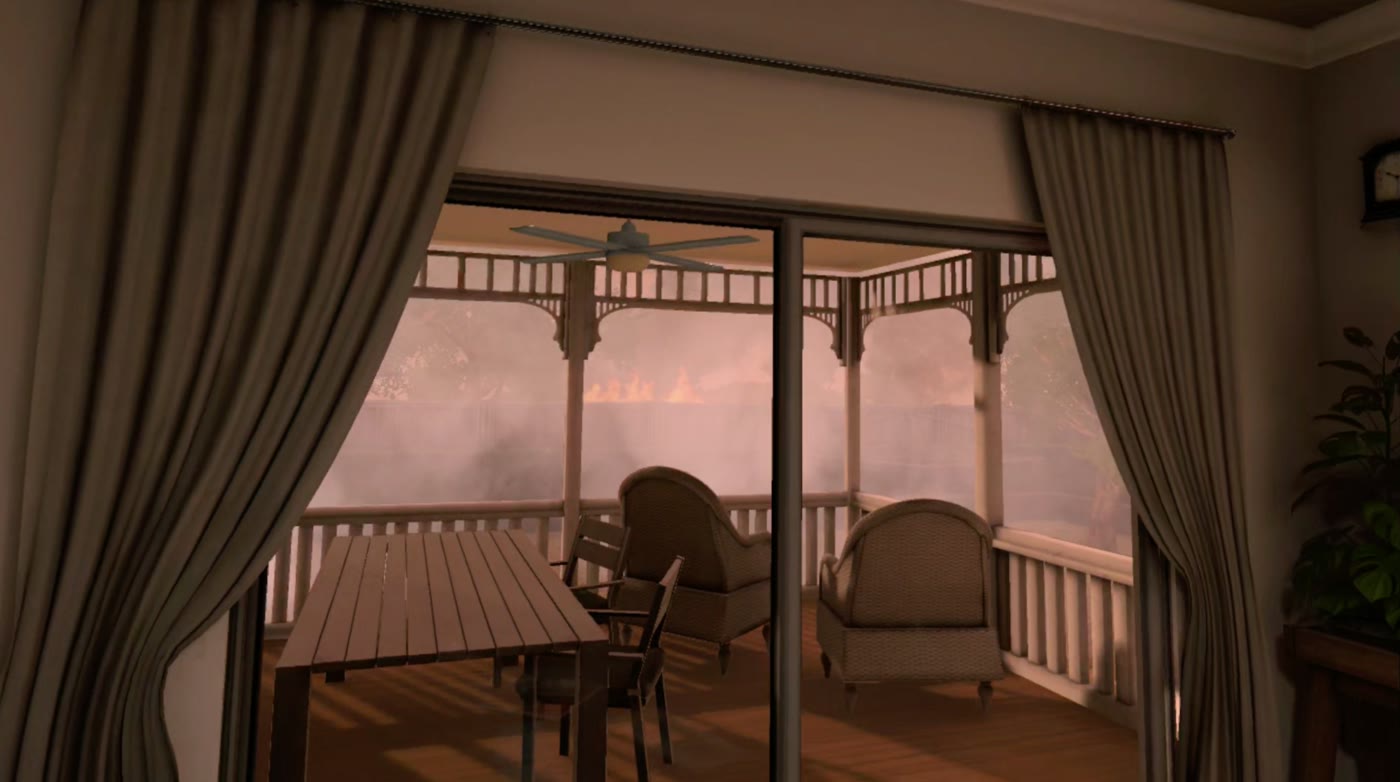
Rather than immediately presenting the user with a dramatic event, each scenario builds gradually. Weather changes. Smoke appears. Rain intensifies. Floodwater rises.
The more believable the environment feels, the more meaningful those changes become.
The technology
Turning environmental change into a sense of danger
The experience combines real-time 3D environments, dynamic weather, environmental simulation, spatial sound and interactive storytelling to transform the space around the user.
Conditions change beyond the windows. Emergency broadcasts interrupt the room. Alerts arrive. Sounds build outside.
Each layer is designed to reinforce the same idea: something that felt safe and familiar only moments ago is beginning to change.
VR allows that progression to happen around the user at full scale, creating a sense of presence that is difficult to communicate through conventional media.
Inside the experience
Putting the user at the centre of the event
The user does not watch the disaster from a distance, They experience it from inside the home.
As each scenario develops, they can follow emergency information, observe changes in the environment and respond to prompts and decisions along the way.
Different pathways adapt the content for different age groups, allowing the same immersive environment to communicate preparedness across a broader community.
Why vr?
Experiencing what cannot safely be recreated
A real flood, cyclone, severe storm or bushfire cannot be staged for training but VR can simulate the conditions around one.
It gives us control over scale, timing, sound, visibility and environmental change, while keeping the user completely safe.
That makes immersive technology particularly powerful for communicating situations that are dangerous, unpredictable or impossible to reproduce in the real world.
The impact
Building recognition and readiness
The more real a risk feels, the easier it is to understand why preparing for it matters.
By placing people inside a believable environment and allowing them to experience that environment changing around them, Disaster Preparation VR turns an abstract warning into something immediate and personal.
The technology helps bridge the gap between being told that something could happen and beginning to understand what that might actually feel like.
And that is where preparedness starts.